Tuesday, October 27, 2015

NPQ: Loud New Voices Emerge to Protect Quiet Library Spaces


Loud New Voices Emerge to Protect Quiet Library Spaces

By ANNE EIGEMAN | March 23, 2015


March 20, 2015; Wall Street Journal and KCTV-5 (Kansas City, MO)

Last week, two separate events brought attention to the precarious place of public libraries in various parts of the country. In Missouri, a group of about 100 students traveled by bus from Kansas City to Jefferson City in the hope of meeting with the governor to relay their dissatisfaction with his proposed $6 million budget cut to the state’s library system. In New York City, the presidents of the Brooklyn Public Library, Queens Public Library, and New York Public Library issued a joint report, “Long Overdue: NYC’s $1 Billion Library Fine,” to draw attention to the terrible physical condition of many of the city’s libraries and the jaw-dropping price tag to repair them. Although the Missouri campaign seems to be mostly student-driven while the NYC campaign is broader, they both are relying heavily on social media to generate discussion about the multiple roles that libraries hold for students and adults and the need for more stable funding sources to support them.


The Save Missouri Libraries homepage provides a powerful list of the adverse effects a library budget cut would have on ongoing statewide programs, with an impact on summer youth programs, afterschool programs, support services for job seekers, as well as programs to support rural residents of all ages. As an offshoot of this campaign,the KC Library Teens Facebook page boasts not only 465 “likes” but an array of photos of students posing in front of the state capitol during their visit last week and a few select shots of students with signs such as: “Without Libraries What Have We? We Have No Past And No Future!” In spite of this planning, however, the much-anticipated meeting with the governor never actually took place because the group was asked to leave the office. As part of their reporting on the story, KCTV cited Kansas City Public Library Executive Director Crosby Kemper’s own Facebook post that he “had never been treated like that in…54 years in active politics.”

In an introductory letter introducing the New York libraries report, the presidents and CEOs of the New York, Brooklyn, and Queens Public Libraries explain, “We present this report as an urgent appeal for long-overdue city action on the staggering infrastructure crisis in our branches.” Highlighting the current maintenance crisis with a bulleted list of ten points, including cooling and heating problems, out-of-order bathrooms, ADA inaccessibility, and overcrowding, the report then devotes a single page to each issue area along with examples from a specific branch library and an accompanying boxed story of a library staff person or “local hero” who has been creatively working around the problem at hand. The homepage for the New York City Library campaign, “Invest in Libraries: Invest in New Yorkers,” also has a Twitter feed, a link to Facebook, and a letter center where supporters can draft and send letters to their own city leaders.

In Missouri, Governor Nixon’s 2016 budget request is complete, but the story of the Kansas City teens is still getting noticed by media sources, including the Missouri Times, the Moberly Monitor-Index, and even Fox News, and so could still draw the attention of a state legislator. Citing a spokesperson for New York City’s mayor, Bill de Blasio, theWall Street Journal reports that New York City has increased annual operating funds for the city’s three public library systems by $22 million and an updated capital plan for the system is likely to be part of the executive budget that will be unveiled this spring.

Building on what seems to be strong demand in past years, this year, edX is again offering the online class “Library Advocacy Unshushed.” Led by a Canadian institution, the University of Toronto, the examples from Missouri and New York City suggest that the class not only has clear relevance for U.S. institutions but also that the Kansas City Library teens might serve as excellent online speakers in the future.—Anne Eigeman


From: NonProfit Quarterly

Monday, October 26, 2015

Renton Reporter: Libraries are crucial catalysts for ideas

Libraries are crucial catalysts for ideas | GUEST COMMENTARY

Oct 24, 2015 at 9:00AM

By Gary Wasdin,
Director, King County Library System

I have worked in libraries in the Northeast, Southeast, Midwest and now the Pacific Northwest, and in almost every city, the public library is the heart of the community.

Librarians often call the library a bridge to a brighter future. The Renton Library is the first I’ve seen that actually is a bridge. I understand the significance of its unique setting and appreciate the community’s advocacy to keep the new library at the same site. It is an engineering marvel and underscores the importance of the Renton Library to the city and the people it serves.

Libraries thrive because of a strong public-private partnership that dates back more than a century. Here in Renton, Neva Bostwick Douglas submitted an ambitious request to the Andrew Carnegie Foundation to help build a public library for her beloved city. The grant was successful, and the city received $10,000 ($240,000 in today’s dollars) to fund its first public library. Even then a controversy erupted as the location of the library became a point of contention. Sound familiar?

Libraries evoke such passion because they are much more than just buildings. Libraries are community engines. They are the catalysts that protect, strengthen and future-proof our lives.

I started at KCLS in January and I’ve spent most of my first 10 months listening to whatever people wanted to tell me about their communities and their lives. Among the many things I’ve learned, three trends have come up repeatedly:

• Aging population – By 2025 nearly one in every four King County residents will be age 60 or older, and we need to think about how we serve this growing population;

• Diversity – King County becomes increasingly diverse every year as immigrant and refugee populations settle in our area, seeking a better life for themselves and their families;

• Need for new and innovative skills – The ability to read and write is still critically important, but youth AND adults require new literacy skills to help them obtain jobs we can’t even yet imagine.

As always, the library must continue to adapt, evolve, and grow to prepare communities for the future. The Renton Library 100 years ago boasted 8,000 books. Today, KCLS offers 3.3 million items, including books, but also audio books, CDs, DVDs, magazines, newspapers, research tools and more.

Thomas Jefferson said, “An informed citizenry is the heart of a dynamic democracy” and literacy is at its core. But today, literacy is more broadly defined and libraries must respond by offering services that build a variety of literacy skills, including:

• Financial Literacy – To learn the basics of financial management for households and small businesses.

• Civic Literacy – To encourage active participation in communities through a better understanding of government;

• Cultural Literacy – To understand our own history and appreciate the history of others;

• Digital Literacy – To develop new job skills or ways to communicate in an increasingly complex world;

• Reading Literacy – To reinforce the foundation upon which all other literacies are built. Public libraries are truly remarkable spaces. They are engines that transform communities and each of us are its engineers.

When you step through the doors of the library, things change. Together, we can transform ideas into action.

Gary Wasdin is director of the King County Library System. He can be reached via email at gawasdin@kcls.org


Thursday, October 22, 2015

BlogTO: The Toronto Public Library responds to Kansas City

By Amy Grief | October 21, 2015


The Toronto Blue Jays are heading into game 5 against the Kansas City Royals right now. And yes, there's a possibility that the ALCS could end tonight. Thankfully, the Toronto Public Library is here to boost our morale by showing Kansas City (and its public library) that we won't go down without a fight.

In a book-spine poem of its own, the TPL sends out an ominous message that reads, "Warning, Kansas City. It Ain't Over 'Till It's Over."

After the Jays lost 14-2 last night, the Kansas City Public Library blasted out, "Canada. Sorry You Lost. What Bluebirds Do." But, we think TPL's response is the real winner in this Twitter feud.

Yet, the KC library has already fired back. Perhaps it's time to settle the score with some good, old-fashioned baseball.

Visit BlogTo for more.

Tuesday, October 6, 2015

American Libraries Magazine: Better Communication, Safer Facilities: Creating a security-aware staff

American Libraries Magazine: Better Communication, Safer Facilities: Creating a security-aware staff

By Steve Albrecht |  September 14, 2015

When I ask library people, “Who is in charge of safety and security for your library?” the most common answer is, “The police department or sheriff’s department.” Some people will say, “The library director,” and a few brave souls will give me the correct answer: “Everyone who works here and even the patrons.”

Safety and security are everyone’s jobs. This includes the library director, every department head, every supervisor, all full- and part-time employees, library board members, Friends of the library members, elected officials, and even patrons—who can and should tell us about safety or security concerns when using our branches.

Safety and security themes

Facility safety and security are big responsibilities and important ones; we’re talking about people’s lives here. Crime, conflict, and violence are real possibilities, so it helps to have some absolutes when it comes to our methods and approaches to keeping staff members and patrons safe. I suggest these five:
  1. We will treat all patrons with respect, even and especially when we disagree with their behavior. We will accept all patrons, without having to accept their inappropriate behaviors.
  2. We won’t tolerate crimes, threats, or acts of workplace violence. We won’t wait for events to make smart security improvements. Security and safety at our facilities is a work in progress.
  3. There should be consequences for patrons who violate the law, our codes of conduct, and our safety and security policies.
  4. We will offer support and assistance for every employee and every patron who asks for or needs help with safety or security concerns, including bringing in law enforcement.
  5. As to our work culture, we will agree that asking for help does not mean employees don’t know how to do their jobs with patrons; it just means they need help at that moment. And we will ask all staffers to do their jobs safely, not just do their jobs.

Degrees of alertness

When you’re watching out for one another and keeping safety in mind, you are in what I call Condition Yellow. This refers to your ability to pay attention to your safety and security anytime you’re on the library floor, in the stacks, at the service desk, in transit between the floors of your facility, entering or leaving your facility, or in view of or in contact with the public. Condition Yellow represents an everyday level of alertness, but you must keep in mind the other two security levels: Condition White and Condition Red.

Condition White is best viewed along a spectrum. It serves its purpose when you are on a break, in a safe back office, eating your lunch, chatting with colleagues, or behind the scenes and other­wise not actively engaged with patrons or strangers. Condition White means relax, catch your breath, and energize to finish the day. The other end of the Condition White spectrum is when you are caught unaware by a situation or a patron’s behavior because you weren’t paying attention and didn’t consider the possibility that he or she would erupt. The operant phrases for the not-good Condition White are: “What just happened?” “I didn’t see that coming.” “I was caught off guard.”

Condition Red gives you two choices: get out of the dangerous situa­tion immediately or, if necessary, protect yourself by fighting back. I prefer the first to the second—as I’m sure your supervisor, library director, human resources rep­resentative, municipal attorneys, and joint powers insurance carrier do as well—but I’m not discounting the need to protect yourself physically. Many people have done brave and heroic things to protect themselves when faced with violence and lived to tell about it, even if they originally had thought they never could.

Three core values for a safer workplace

Three elements can keep you safer (and saner) while you interact with patrons.

Self-protection. You can’t take care of others if you’re not safe yourself. When working around people you don’t know, it makes good security sense to stay at least an arm’s length away until you feel more comfortable coming closer. When people feel crowded, they often react with anger. Give people their space, especially if you see that they are starting to get upset.

Read situations with angry or entitled patrons by examining their tone, facial expressions, and body language for signs that they feel embar­rassed, humiliated, or disrespected; maybe there are no good solu­tions or you see escalating anger or sudden rage. In these events, their next response could be to use violence. If that happens, you have every right to disengage, physically leave the situation, and get help.

You can’t just walk away if a patron raises his or her left eyebrow at you, but you are under no obligation to stand at your desk or on the library floor and wait to be assaulted either. Justify why you left to get help after the situation has stabilized.

Anger management and stress management. When it comes to dealing with difficult or challenging patrons, who may use mean words to try to degrade you, your job, or your efforts, always remember QTIP: Quit Taking It Per­sonally.

Most of the time, angry, or entitled patrons aren’t mad at you personally; they’re mad at what you represent—a public space entity with rules, a code of conduct, and policies they find irritating, chafing, or not meant for them. They don’t have the right to abuse, threaten, or harm you, but you will have to use patience, per­spective, and customer service skills when dealing with them.

Working smart. You must know what to say, what to do, when to stay or go, whom to call, and how to get help when dealing with challenging patrons. Most times you can use good com­munication skills to solve a patron’s problem; sometimes you just need to get another employee or supervisor with a different approach.

Getting help isn’t a bad reflection of your customer service skills. Think about the concept of “the right person for the right patron in the right situation at the right time” as an alignment of sorts. Human beings align and connect with one another for a variety of reasons, including race, age, gender, religion, country of origin, neighborhoods, hobbies, and life­styles. You can use this to your advantage in service situations by trading off with one another based on who gets along best with the approach­ing patron.

You’ve certainly seen this many times: A patron comes in who seems to like you but hates your coworker. Or here comes the patron who can’t stand you, and tells you so, but he or she seems to connect with your colleague in a way that’s a clear signal for you step away and let them interact. Once you and your colleagues recognize these alignments, you can trade off so that an employee works with certain patrons who align with him or her best. It’s not always possible to do this, but when it is, you can choose to go with a patron’s flow instead of trying to swim upstream.

A key component of working smart is the ability to document bad behavior, using an informal memo or email to your boss or a more formal approach, like filling out a security incident report.

Here’s one example where after-the-fact documentation can help protect your professional rep­utation: You are speaking on the phone to an increasingly angry patron who starts cursing at you. You warn him that he can’t speak to you this way and tell him that if he continues, you’ll hang up. If he keeps cursing, keep your promise and hang up. Take a few stress management breaths and then document the conversation, including the actual curse words verbatim.

When this type of patron calls back to complain to your supervisor or shows up in person to meet with your library director, he or she is often wearing a shiny halo and a set of tiny angel wings. This is what the director will hear: “I’ve never been treated like that in all my years!” or “I was shocked, insulted, embarrassed, and now I’m thinking of speaking to my lawyer.” It’s important to depict accurately exactly what the person said to help your boss justify why you did what you did.

Posting and enforcing codes of conduct

I say this with love in my heart, but after having looked at dozens and doz­ens of code-of-conduct rules from libraries across the US, my conclusion is that many of them sound like they were written by city attorneys and not by true library people. The language is stilted, stiff, and almost biblical. (“Thou shalt not consume thy foods in said building.”) This is hardly surprising since much about compliance with policies, especially in government, is derived from advice from our legal friends.

What’s best is a patron-friendly code of conduct written so there are no gray areas about what you can and can’t do in the library. It should be firm but not sound so legalistic that patrons get a little mad by the time they’re done reading it.

I’m always puzzled when library directors or library employees tell me they have behavioral problems in their libraries and yet the only place to find the code of conduct is on a clipboard behind the circulation desk (which no patron has ever actually asked to read) or on the library’s website.

Having your code of conduct posted in several highly visible places throughout your library is an important first step toward ensuring continued patron compliance. Hiding these important rules from view is a mistake because it allows patrons to fall back on standard answers about noncompliance: “No one ever told me.” “I didn’t know I couldn’t do or say that.” “Other people are doing the same thing.” “I’ve been coming here for a long time, and I always thought I could do this or that.”

I’m a big believer in putting the rules of library conduct on large posters that are visible near the entrance and other common areas. I also like changing the language from negative to positive.

“No cellphone calls in the library” should be rewrit­ten as “Please take your cellphone calls outside.” “No eating or drink­ing in the library” can be recast as “Please enjoy your food and beverages before you come inside.” You will get better compliance from patrons and create a more welcoming atmosphere by using positive language instead of negative rules.
Making Safety, Security, and Service Rules Work
  • Know that a good predictor of future bad patron behavior is past bad patron behavior.
  • If you impose no consequences for problem behavior, expect it to stay the same or escalate.
  • Don’t trade security for convenience. Lock employee-only doors, protect yourself and your colleagues, and use your secu­rity devices, policies, and procedures.
  • Don’t rationalize irrational patron behaviors.
  • Don’t ignore safety or security problems; they rarely go away.
  • Listen carefully to colleagues and patrons as they explain their view of a situation.
  • Avoid snap decisions unless it’s an emergency situation. Assess several possible responses before you make a decision.
  • As best as you can, stay focused and nonjudgmental; don’t lose your patience or your temper or become fearful—both hurt the decision-making process.
  • Paraphrase what you hear back to the patron until you both agree what the problem is.
  • When you understand what the problem is, take action to resolve it quickly by valuing the patron’s time.
  • Explain your position using firm, fair, consistent, and assertive language.
  • Keep your tone neutral and polite. Take special care to not use a condescending tone, especially when you’re tired, frus­trated, or at the end of your day.
  • Work as a team with colleagues on particu­larly difficult patron situations.
  • Get outside help, support, and advice if necessary, especially from safety and security stakeholders (police or sheriff’s department, human resources, city attorney, county counsel, risk management personnel, facilities staff).
  • After a difficult patron situation, debrief, support, and praise one another when it’s safe to do so.
This is an excerpt from Library Security: Better Communication, Safer Facilities, by Steve Albrecht (ALA Editions, 2015).

From: American Libraries Magazine

Monday, October 5, 2015

The Huffington Post: This Is Why You Should Celebrate Banned Books Week

The Huffington Post: This Is Why You Should Celebrate Banned Books Week

Censorship is almost unheard of in America today, and book challenges are dwindling. We have librarians to thank for that.

By Maddie Crum | September 28, 2015

STUDIO-ANNIKA VIA GETTY IMAGES
This year’s Banned Books Week kicked off on Sunday. Buttons were worn. Facebook posts about the ignorance of those striving to make information inaccessible were crafted. Literature was celebrated with zeal.

As always, those behind the campaign highlighted statistics indicating that the desire to censor -- an impulse humanity has acted upon throughout most of our history, restricting reading materials from school curricula or entire societies -- still exists in America and beyond. And, as always, decriers decried: Books aren’t really banned in America anymore. So what’s the fuss about?

It’s worth reexamining, then, why Banned Books Week exists, and why it should continue to, in spite of the (currently) waning threat of censorship.

Established in 1982 by librarian Judith Krug, Banned Books Week is sponsored by a handful of organizations, including the Library of Congress. But the driving force behind the awareness campaign is the American Library Association, which describes it as a promotion of “the freedom to choose or the freedom to express one's opinions even if that opinion might be considered unorthodox or unpopular and stresses the importance of ensuring the availability of those viewpoints to all who wish to read them.”

As part of its annual campaign, the American Library Association provides a snapshot of where and why people attempted to censor library books in one particular year. This year, Sherman Alexie’s The Absolutely True Diary of a Part-Time Indian topped the list of titles, due to purported cultural insensitivity, drugs, sex and depictions of bullying. Marjane Satrapi’s Persepolis came in at number two for similar reasons, and And Tango Makes Three, Justin Richardson and Peter Parnell’s children’s book about a baby penguin with two dads, was third.
The point is not to rank inflammatory books like game highlights. It’s to remind readers that information hasn’t always been free, and that we have librarians to thank for its freedom.
This list, and other such rankings and timelines on the American Library Association’s site, is compiled based on data from the organization’s Office for Intellectual Freedom, an arm that works directly with librarians and teachers who need support when faced with potential challenges. For that reason, it represents only a slice of censorship attempts, many of which go unreported. And, because it is the Office for Intellectual Freedom’s priority to equip those handling censorship attempts with legal support, identifying details about the challenges aren’t revealed to the public.

That this data is murky has always spurred contention, but especially recently. This summer, David Goldenberg wrote for stats-driven site FiveThirtyEight about his attempt to identify the most challenged book in the country. A little poking around on the ALA’s site revealed this to be And Tango Makes Three, but he wanted to verify that with the organization. When the ALA’s Office of Intellectual Freedom declined to provide the writer with raw data -- which contains identifying details about specific school districts and libraries -- he retaliated with an article addressing the statistical validity of its lists.

In a conversation with The Huffington Post, Assistant Director of the ALA's Office of Intellectual Freedom Kristin Pekoll confirmed that their data is confidential in order to protect librarian's and teacher's jobs -- those combating challenges want to ensure that their position doesn't jeopardize their jobs. So, because these lists aren't for public consumption, it's impossible to discern whether they are statistically valid. But determining whether one book was challenged more times than another book is beside the point. The point is not to rank inflammatory books like game highlights. It’s to remind readers that information hasn’t always been free, and that we have librarians to thank for its freedom. And to be fair, this point could be made without compiling statistically shaky lists, and the ALA would do well to consider other avenues.

Other concerns surrounding Banned Books Week center mostly on semantics. The ALA  unwisely lumps “banned” books and “challenged” books together into one category, although banning a book poses a much greater cultural threat than challenging one. Broadly, “banning” constitutes removing a title from an institution; “challenging” represents an attempt to do so, but the term can encompass even the most innocuous parental griping. That this spectrum is broad and varying, yet discussed as a consistent whole under the banner of Banned Books Week, has raised questions in recent years.

In 2009, Mitchell Muncy wrote an article for The Wall Street Journal titled “Finding Censorship When There Is None.” Parents rallying against Harry Potter isn’t censorship, he wrote. Censorship is a government restricting access to books. He’s right; banning and censorship aren’t necessarily words that should be in our contemporary vocabulary, save to discuss the past and to ensure that our current path carries us into a bright, informational future. As it stands, challenging is the word, and the act, up for discussion.
They do the behind-the-scenes work that ensures challenges don’t turn into bans; that they’re successful in this is a very important thing worth celebrating, and, yes, publicizing.
Challenged Books Week doesn’t have the same rally-cry ring to it as Banned Books Week. That’s because challenges aren’t such starkly bad things. They’re the first step towards a ban, and so they tread on dangerous, uncomfortable territory -- sometimes necessarily so. As Ruth Graham writes in a recent essay for Slate, “a parent merely questioning the presence of a book on a required reading list [...] is part of a reasonable local conversation about public education.”

True! But without careful moderation, these conversations can (and, historically, have) slide into more emphatic demands that a book not be taught in school due to its themes of sexuality. Who’s guarding this slope, preventing a slip from questioning into banning? Librarians.

In her argument against celebrating Banned Books Week, Graham broke down the challenges listed on the ALA’s site. Of 290, 27 concerned public libraries as opposed to school libraries and school curriculums. “Of the 27 cases in which a book was challenged at a public library, the ALA documents a whopping four cases that definitively ended with a book being completely removed from circulation,” she writes, failing to note that it is the Office of Intellectual Freedom’s responsibility to assist in these cases, ensuring said happy outcome.

Almost as an aside, Graham notes that we live in an age where, if a book does happen to be banned from a library or school, citizens can access it more easily than ever. With Amazon! And money. This is fine for those who can afford to buy books that aren't available to them in libraries, and those who have the knowledge of the existence of such books. Libraries don’t pretend to primarily be serving these communities. They support those who need free access to information.

The piece is headlined: “Why Do We Still Publicize Banned Books Week? The Good Guys Won!” Well. Collectively, yes, the side of free information is on a serious upswing. But this isn’t a naturally occurring phenomenon -- as evidenced by our storied history of censorship, and the still-waging war against free expression happening elsewhere in the world. It’s thanks to the work of organizations such as the ALA, which equips librarians and teachers dealing with challenges with advice and legal services. They do the behind-the-scenes work that ensures challenges don’t turn into bans; that they’re successful in this is a very important thing worth celebrating, and, yes, publicizing.

From: The Huffington Post

Saturday, October 3, 2015

The Guardian: Roald Dahl book to be given away with every McDonald’s Happy Meal in the UK

Roald Dahl book to be given away with every McDonald’s Happy Meal in the UK

The fast-food chain will offer extracts of Charlie and the Chocolate Factory, George’s Marvellous Medicine and Matilda with its kids’ meals, in a campaign backed by the National Literacy Trust
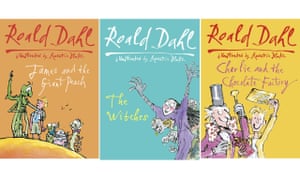
Three Roald Dahl book covers
Dahl covers... 15% of children don’t own a book. Photograph: book jacket

The estate of Roald Dahl, the author behind such culinary delights as Wonka’s Whipple-Scrumptious Fudgemallow Delight and the upside-down fizzy drink Frobscottle, has teamed up with McDonald’s to give millions of books away with Happy Meals.
For six weeks from tomorrow, 14m specially created Roald Dahl books will be free with Happy Meals in the UK, McDonald’s announced today. Eight titles have been put together for the promotion, each showcasing extracts from two Dahl books, including Roald Dahl’s Fantastic Families, with tasters of Charlie and the Chocolate Factory and Fantastic Mr Fox, and Roald Dahl’s Magical Mischief, extracting George’s Marvellous Medicine and Matilda.
Abigail Moss, deputy director of the National Literacy Trust, which is backing the campaign, said it was “reaching out on to the high street, where the families are ... Many parents will have enjoyed the wonderful world of Roald Dahl when they were young and now they’ll be able to share these iconic stories with their children. The scale of the campaign will reach millions of children, including many who haven’t owned a book before, inspiring them to enjoy reading and improving their life chances.” According to research from the NLT, 15.4% of children don’t have a book of their own, while only 55.4% of children enjoy reading “very much” or “quite a lot”.
McDonald’s has given away more than 22.8m books through its Happy Readers programme since 2013, with previous titles by Enid Blyton and from Dorling Kindersley’s Amazing World series.
“Last year when we partnered with McDonald’s on Enid Blyton, we had some absolutely fantastic letters through – one from a grandmother who said she had never read with her grandchildren, but that now she was sitting in McDonald’s reading Blyton’s The Secret Seven, and it was one of the best days of her life,” said Moss. “We’re reaching 14 million people, and over the last few years 22.8m books have been given to children, some of whom will be the one in seven children who don’t own a book.”
Moss said that the McDonald’s giveaway was also targeting “family time – when the family are at a table, talking”. A survey of more than 3,000 UK parents, children and grandparents released to mark the new partnership between McDonald’s, the National Literacy Trust, Penguin Random House and the Roald Dahl literary estate found that although families want to spend more time reading together, a third of parents “say their own busy lives and hectic family schedules, such as after-school activities, get in the way of reading time”.
The survey also found that children want to be read to by their siblings, but just 2% of older brothers and sisters are involved in reading with the family.
Last month, Australian children’s health advocacy group the Parents’ Jury criticised the Happy Readers promotion in Australia, calling for it to be closed down for encouraging children to consume fast food in order to collect the books included in the campaign.
But Tam Fry, spokesperson for the UK National Obesity Forum, commented: “On the assumption that McDonald’s will not be branding books but will distribute them as published, introducing books to the families likely to be McDonald’s patrons can be only a good thing. McDonald’s customers will buy burgers regardless and the bonus of a book may stimulate their children. Much better than a cheap plastic toy.”
Moss said the issue of the campaign pushing fast food on children had not been raised with the National Literacy Trust, adding: “This is about kicking the reading habit off – about making it fun and enjoyable, and part of family time together.”

From: The Guardian

Friday, October 2, 2015

The Guardian: Bedtime story is key to literacy, says children's writer Cottrell Boyce

Bedtime story is key to literacy, says children's writer Cottrell Boyce

As a new literacy drive is launched, authors including David Walliams and Michael Rosen warn of threat to storytelling from screens and busy lives

A woman reads a story to her child. A recent survey found that a third of parents never read a bedtime story to their children. Photograph: PhotoAlto/Alamy


The childhood tradition of a bedtime story is in serious peril, as experts warn that parents are not making the time to read to their children at the end of the working day and stop reading to them at too young an age.
“Parents lead very, very busy lives,” said Diana Gerald, chief executive of theBook Trust, which encourages children and families to enjoy books and develop their reading skills. “We live in a world where parents are juggling work and home life. Lots of parents are working shifts and there’s a lot of pressure on families. People are increasing their hours.”
A recent survey, by YouGov for the children’s publisher Scholastic, revealed last week that many parents stop reading to their children when they become independent readers, even if the child isn’t ready to lose their bedtime story. The study found that 83% of children enjoyed being read aloud to, with 68% describing it as a special time with their parents. (“It felt so warm, so spirit-rising,” as one 11-year-old boy put it.)
One in five of the parents surveyed stopped reading aloud to their children before the age of nine, and almost a third of children aged six to 11 whose parents had stopped reading aloud to them wanted them to carry on.
Frank Cottrell Boyce, who won the 2004 Carnegie medal for his first children’s book, Millions, was dismayed by the findings. “The joy of a bedtime story is the key to developing a love of reading in children”, he said – more so than literacy classes in school, which can be “a very negative experience”, for the many children he meets during visits to schools, whose first experience of books is in the classroom.
“They’re being taught to read before anyone has shared with them the pleasure of reading – so what motivation have they got to learn?” said Cottrell Boyce. “Even the ones that attain high levels of ‘literacy’ (whatever that is) are in danger of achieving that without ever experiencing the point of reading.”

Frank Cottrell Boyce
 Frank Cottrell Boyce: ‘This is something people have done since the days of sitting around campfires napping flints. To stop doing now is to break the great chain of our being.’ Photograph: Alamy

A survey by Settle Stories, an arts and heritage charity, of more than 2,000 parents with children aged four to 10 claimed that only 4% read a bedtime story to their child every night, with 69% saying they did not have the time. In February a study by TomTom of 1,000 parents of children aged one to 10 found that 34% never read a bedtime story to their children, with 29% blaming late working and 26% the daily commute.
“Parents have definitely got the message they need to read to their children up to the age of five or six,” said Catherine Bell, managing director of Scholastic. “What’s really interesting [is that] as children acquire the skills to read themselves, parents back off. It comes across really clearly: when parents stopped, the children wanted them to continue. They thought it was a really special time with their parents and they felt really positive about it.”
On Thursday the education secretary, Nicky Morgan, and the children’s author and comedian David Walliams launched the next stage of a joint literacy drive, announcing a target to make English pupils the most literate in Europe within five years. Currently, nine- and 10-year-olds in England are ranked sixth in Europe.
The government acknowledges that the role of parents is critical and has created new activities and resources to help get more children reading before they start school. “Few things can compete with the joy of getting stuck into a good book, and I believe that is something no child should miss out on,” said Walliams.

Michael Rosen: ‘When I was in my forties, [my father] was still reading to me.’
 Michael Rosen: ‘When I was in my forties, [my father] was still reading to me.’ Photograph: Graham Turner for the Guardian

The children’s author Michael Rosen enjoyed being read to by his parents for decades. “My mum read to me from as early as I can remember. I have many of the books she read to me and I would plead with her to read some of them over and over again.”
Then it was his father’s turn. “When I was about 12, our father decided that he would read to us on our camping holidays and over several of these holidays he read the whole of Great Expectations, Little Dorrit and a Walter Scott novel, Guy Mannering.”
It didn’t end there. “Because he was in the US army, he was very good at American accents and he read us Catcher in the Rye and Catch-22 when I was in my teens. Then when I was in my 40s, he was still reading to me, but this time it was his own memoir, Are You Still Circumcised?”
Rosen believes the TV in the bedroom is the killer of bedtime stories. “I sometimes ask audiences of children, ‘How many of you watch TV till you go to sleep?’ and it’s well over 50% in most cases.”
A child reading CS Lewis’s Prince Caspian. The writer John Boyne says: ‘I’ve grown less concerned with  how young people read and more fanatical about just getting them to read at all.’
A child reading CS Lewis’s Prince Caspian. The writer John Boyne says: ‘I’ve grown less concerned with how young people read and more fanatical about just getting them to read at all.’ Photograph: Danny Lawson/PA
John Boyne, author of the bestseller The Boy in the Striped Pyjamas and his new novel The Boy at the Top of the Mountain, said: “I’ve grown less concerned withhow young people read and more fanatical about just getting them to read at all. Whether they read with their parents or away from them, on electronic screens or on paper, seems unimportant now.”
Cottrell Boyce, however, is passionate about preserving the bedtime story. “Great ideas come from people who are able to bring their whole selves – emotional as well as rational, memory as well as logic – to bear on problems. Bedtime stories give reading an emotional depth. Why would you ever stop? This is something people have done since the days of sitting around campfires napping flints. To stop doing it now is to break the great chain of our being.”

From: The Guardian